What Does Argan Oil Actually Do for Your Hair?
Argan oil can help dry-feeling hair feel softer, add shine and make flyaways easier to manage. For men with coarse, curly or longer hair, a small amount can be a useful finishing touch. If your hair is fine or gets oily quickly, the trick is using less.
Think of it as a conditioning addition to your routine. It won’t replace your shampoo, conditioner or styling product, but it may help you get a smoother finish without changing your whole routine.
What Is Argan Oil?
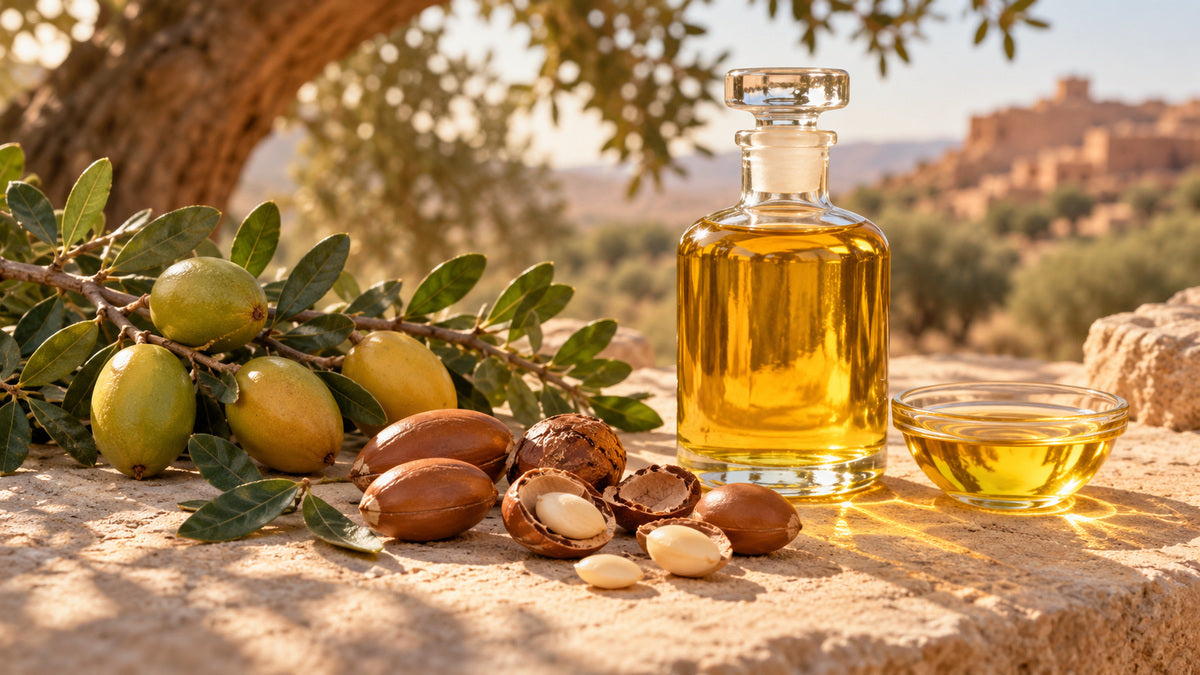
Argan oil comes from the kernels inside the fruit of the argan tree, which is native to Morocco. It contains fatty acids and naturally occurring vitamin E, and is used in both pure hair oils and formulated products such as conditioners and serums.
You’ll often hear it called “liquid gold”. That nickname sounds impressive, but what matters is how the product works with your hair: the texture, the finish and whether it leaves your hair feeling manageable rather than heavy.
Who Is Argan Oil Best For?
Your hair type and styling goals matter more than the hype around an ingredient.
- Dry-feeling or coarse hair: A little oil can add softness and a smoother finish.
- Curly or wavy hair: It can help smooth flyaways while you shape your natural texture.
- Longer hair: Apply mainly through the lengths and ends, where you want extra conditioning.
- Fine or flat hair: Start with a very small amount. Too much can weigh your hair down and reduce volume.
- Hair that gets oily quickly: Keep it away from the roots, or skip it if your hair already feels soft and manageable.
If you’re still building your routine, start with our five hair-care tips for men.
How to Use Argan Oil Without Making Your Hair Greasy
Follow the directions on your product, especially if you’re using a serum or an oil blend. For a concentrated hair oil, start small—you can always add more.
- Start with one drop. Rub it between your palms to spread it into a thin layer.
- Apply through the lengths and ends. Avoid putting the full amount straight onto your roots.
- Distribute it evenly. Use your fingers to work it through the areas that feel rough or look frizzy.
- Check the result before adding more. Your hair should feel softer, not coated or greasy.
Short, fine hair may need less than a drop. Longer or thicker hair may need a little more. There’s no single amount that works for everyone.
On Damp Hair
If the product is suitable for use on damp hair, work a small amount through towel-dried lengths before styling. Keep the application light if you want height, separation or a matte finish.
On Dry Hair
Use a tiny amount as a finishing touch to smooth flyaways or add shine. Concentrate on the ends and outer surface rather than repeatedly running oily hands through the roots.
If your hairstyle loses its shape or looks greasy, use less next time. Adding more wax on top usually won’t solve an excess of oil.
Can Argan Oil Replace Heat Protection?
Don’t assume that pure argan oil—or any product containing it—provides adequate heat protection. Look for a styling product specifically formulated and labelled for that purpose.
By Vilain Sidekick is a pre-styling spray that provides heat protection alongside hold and volume. Apply it to damp hair according to its directions before blow-drying. Keep your dryer on a low or medium heat setting rather than relying on a product to compensate for excessive heat.
If you also use argan oil, keep the amount small and apply each product separately as directed. Oil adds conditioning and shine; your pre-styler helps you build the hairstyle.
Pure Argan Oil or a Hair-Oil Blend?
Both can have a place in your routine. Pure argan oil offers a simple formula, while a blend or serum may be designed to spread more easily, feel lighter or give a particular finish.
On an ingredient list, argan oil is usually named Argania Spinosa Kernel Oil. Its presence tells you that the product contains argan oil, but it doesn’t tell you how well the complete formula will suit your hair.
Other ingredients aren’t automatically “fillers”, and pure oil isn’t automatically the better choice. Choose according to your hair type, the product’s intended use and the result you want.
What About Dandruff or an Itchy Scalp?
Dry-feeling hair and a flaky scalp are different concerns. Argan oil shouldn’t be presented as a dandruff treatment. If dandruff is the issue, use a shampoo designed to treat it and follow the instructions on the bottle.
For persistent itching, redness or flaking, get advice from a dermatologist rather than adding more oil to your scalp.
Frequently Asked Questions About Argan Oil
Can I Use Argan Oil Every Day?
You may not need to. Follow your product’s instructions and adjust according to how your hair feels. If daily use leaves it flat or greasy, reduce the amount or use it less often.
Will Argan Oil Give My Hair More Volume?
Oil isn’t a volume product, and too much can make hair look flatter. If volume is your priority, focus on your haircut, blow-drying technique and pre-styler, then use oil sparingly on the ends if needed.
Should I Use It Before or After Hair Wax?
For conditioning, use a small amount before styling if the product directions allow it. You can use a tiny amount afterwards for extra shine, but it may soften the finish of your wax. For a textured, matte hairstyle, you may prefer to leave oil out of the finishing step.
Is Argan Oil Worth Adding to Your Routine?
If your hair feels rough, looks dull or needs help with flyaways, argan oil is an option worth trying in a small amount. Judge it by the result: softer-feeling hair, the right level of shine and a style that still holds its shape.
Start with the basics, then add what your hair needs. Explore our hair-care products or browse more hair-care guides to build a routine that works for you.